
Author: Maggie Dugan
-

Getting Smart in the Sandpit
After facilitating many a Sandpit (aka Ideas Lab) for academic researchers, we wondered if our methodology might work for a development problem? Inclusive Innovation was born to find out. Here’s what we learned.
-

The Language of Creativity
Every type of science has a robust language of its own, rife with acronyms and jargon that make for efficient communication amongst peers within the field but can be confusing, misleading or off-putting to people from other disciplines. This raises our attention to the fact of how much we rely on language to convey meaning,…
-

Walk this Way
Walking, it seems, is now a tested method for coming up with creative ideas. It probably doesn’t surprise you that standing up and stretching your legs and getting some aerobic activity to move your blood around might help your brain to conjure up more options. But now there’s research from Stanford University’s Graduate School of…
-

No Agenda Survives Human Contact
It’s not that we don’t have a design for the workshop. Nor is it that we’re keen to keep our participants in the dark. Our experience is that no published agenda survives human contact. So as soon as there are people introduced to the process, things change, slow down, speed up, go a different direction.…
-

Connect and Catalyze
The team of mentors – there can between three to five at an Ideas Lab – usually represents a range of different academic perspectives that have some bearing on the question that’s central to the event. Their expertise is essential, but an equally important attribute for a mentor is to be ambitious about the science,…
-

Portable Recording Devices
We often refer to Post-it notes as portable recording devices, just to put in perspective why we stick to using them. It’s one of the easiest, fastest ways to get a group of people to put their thoughts together and then sort them out, collectively. Quickly, a group can organize a wall of hundreds of…
-

Talk to Strangers
People from other disciplines, other departments, other universities. They are interested in a domain that is not exactly your science. It may be a neighboring branch of science with obvious parallels or overlaps but still with an approach that is different from yours, or it might be from a very different universe, a science that…
-

Energy Management
It is interesting that in this day and age of climate change we are all very aware of the discussions about “energy conservation” and we make a concerted effort to turn off the lights of an empty office, to walk rather than drive to the shop, and turn down our house temperature by a degree…
-

Ideal Participant Pool
KI’s Ideas Labs are intense and immersive, bringing together people of diverse backgrounds and disciplines in order to generate ideas for radically novel research proposals. Our process helps these extreme ideas emerge, but there’s another very important component to the success of these workshops: the collection of participants in the room. Here’s how we counsel…
-

Tolerating Ambiguity
It‘s usually in a moment of feeling blocked or stalled that there’s a fierce temptation to seize the nearest reasonable solution. This is when we need a tolerance for ambiguity. It means staying in uncertainty, or staying with the question, despite the discomfort of not knowing the answer, or not knowing where we’re headed. It…
-

Just Say Yes
The KI method depends on a unique skill that scientists may be unaccustomed to: deferring judgment. It is the capacity to set aside your opinions temporarily and accept a new or odd idea and take the time to develop it before dismissing it. If you can overlook the flaws of a suggestion and play with…
-

Throwaway Data
During the creative problem solving process, there’s a stage when we encourage people to capture all the information about the problem we’re trying to solve. We’ll ask them to write down any piece of information about the challenge that might be pertinent. At this point, the client – or stakeholder, or problem owner – will…
-

Frugal Innovation
Scarcity can be a major driver for innovation. A bleak economy can thrust companies, organizations, universities – and entire countries – into an austerity mode. In the context of a changing economy when it seems everything has to be faster, better and cheaper, there’s a type of innovator who’s thriving: the jugaad innovator. Jugaad is…
-

A Sandpit Tale
Knowinnovation has been facilitating Sandpits and Ideas Labs for a number of years, and this has has given us the opportunity to witness the emergence of some fascinating science. In many ways, KI is like a midwife, creating an open environment for different perspectives to collide, which leads to new questions that ultimately provoke new…
-

Make Room
Where you meet sets the mood for your meeting, which is why the space matters. Put people in the same old meeting room and the chances of getting the same old output are pretty good. If it’s a big open room with an inviting seating plan around round tables, with long walls of white paper…
-

Failure Teaching
There is a common belief that most significant learning comes from our failures. And yet there are mistakes that we seem to repeat, over and over again. Is learning from failure overrated? A few years ago, researchers at MIT suggested that we may not learn as much from mistakes as we do from success. But…
-

It’s Down to Preference
Some people thrive in a group setting, and their creative flow is sparked by the frenetic and popcorn-style of a fast meeting with lots of ideas, or even if it’s not fast, in an environment where ideas are exchanged and developed by a number of people. Others think better when they’re operating solo. They solve…
-

Size Matters
Group work can be clunky and cumbersome. You have to spend longer clarifying the objectives, aligning resources and getting people on board. Sometimes, it can seem nearly impossible to achieve the consensus necessary to advance within a task. Groups are a powerful mechanism to produce innovative solutions, but getting to that product can be arduous,…
-

Leading Creatively
One widely used definition of creativity describes it as the generation of ideas that are both novel and useful. There is nothing wrong with this definition, it accurately describes a class of ideas. But for some reason, despite the equal weight of the words useful and novel in the aforementioned definition, novel ends up getting…
-

Networking for Novelty
The network of people around you is an important resource. This pool of who you know, and who they know – and all the accumulation of collective knowledge of the people within your reach – can make a difference in your ability to do the things you dream of doing.
-

When is a Sandpit not a Sandpit?
into a shorter period of time? Do breakthroughs happen in the same way, or is there a minimum time required to achieved innovation? In an attempt to answer these questions we’ve designed a shorter event, a Mini-Sandpit or a Jumpstart. It is literally that – a jumpstart to enable the right people to come together…
-

Be Deliberate
Creative ideas sometimes come as a surprise, but they don’t have to be an accident. Instead of waiting for good ideas to arrive at random or by luck; we can hunt them down. When you use a creative process – whether it’s for a short meeting, a 2-day or week-long workshop or a 3-year project…
-

Female Factor
Science is a subject available to both genders and yet women, if not directly discouraged, haven’t been as encouraged to pursue it as a field of study. Girls are steered toward languages and the liberal arts, implying that maths and sciences are better left to the boys. It’s a stereotype that’s been torn down and…
-

The Productive Dissident
Deviance has an important place in the innovative process. We don’t challenge norms without a little (or a lot) of deviant thinking. And the single best way to discourage inventive, out-of-the-box deviance is to prohibit disagreement and probing questions. We need a little clarifying, critical judgment now and then. The trick is to cultivate a…
-

Equating Procrastination
A skilled procrastinator can be highly innovative, inventing all sorts of reasons not to do something, conceiving clever excuses to delay starting or not to have finished. If you have to rely on someone who’s expert at this kind of delaying, it can be maddening. If you’re the procrastinator putting off your own projects, it…
-

Brains and Soul in Equal Measure
So much depends on getting the right people in the room. A workshop designed to produce innovative outcome can fail – even with the perfect agenda design and the most astute facilitators – if the people who’ve been assembled don’t have the right spirit and motivation to help it succeed. But how do you get…
-

Wondering Mind
A subtle shift in language provokes our thinking and makes our brain more nimble. Instead of complaining about what doesn’t work or isn’t happening, the problem posed as a question starts a chain reaction that ignites our curiosity. We realise it’s not so much about naming the problem, it’s more about wondering what are all…
-

Right, then.
Still there you are in some meeting, ostensibly about cultivating novel solutions to a chronic problem and the standard assumptions are upheld – sometimes even defended – usually by the person who thinks they know better. The person who needs to be right, gets to be right – but often at the expense of novel…
-

Defining Brainstorming
In 1958, Yale University conducted a study to test brainstorming and concluded that brainstorming individually was more effective than brainstorming in a group, but it was widely misinterpreted as “brainstorming didn’t work.” The Yale study created a debate that has percolated for fifty years. Does brainstorming work or not? Does a group generate more and…
-

When Toys are Handy
The playful gizmos and gadgets we bring along help make the conference room look less sterile and corporate, but the toys are not just for show. If you’re a tactile person, being able to squeeze a rubber ball, or twist the beads of a wooden wand, fumble with a Rubik’s cube or stack tiny colored…
-

Right People in the Workshop
The alchemy that results in a successful workshop depends on starting with the right ingredients. We have found that one of the most important of these elements is the people who are invited to attend. Here’s are a few tips on recognizing the best — and less-than-ideal candidates for a creative team science workshop.
-

Sweet Solitude
The KI process depends on people with diverse research backgrounds coming together, getting to know one another and exchanging novel ideas. But, sometimes getting the most out of group thinking and new ideas means individuals need to take time in solitude to let these ideas sort themselves out.
-

Do You Feel Lucky?
Lucky people deliberately choose to make their life diverse and different. Unlucky ones tend to stick to routines. So one way to instantly improve your luck, and your creativity, is to change things up. Do it differently. Eat lunch at a different place. Shop at a new store. Walk home a different route. And while…
-

Another Brainstorming
If it’s a productive brainstorming session, it can give the participants a real sense of accomplishment and group ownership of an idea, which can only enhance the sense of team – much moreso than a rigged teambuilding event. If the session if lively and humorous, the laughter reduces stress and creates a good working climate.…
-

The Naïve Mind
If your team is fairly expert, it might help to invite a non-expert who may be especially fluid or creative, but who’s in the dark about the subject at hand. Their questions often end up redefining the problem, and because they are unencumbered with the conventional wisdom, they are freer to think of wild and…
-

A Smaller Sandprint
Our initial problem statement: How to minimize KI’s carbon footprint? We invited the participants at a Sandpit on energy efficient design to offer suggestions first of all on how we could measure our carbon output, so we have a benchmark against which to improve. And then we invited any ideas they might have about controlling…
-

Innovate this Week
World Creativity and Innovation Week has been happening since April of 2001, and is meant, according to co-founder Marci Segal, “to help people celebrate their capacity to use their creativity to make the world a better place, and to make their place in the world better, too.” There are events this week in Canada, the…
-
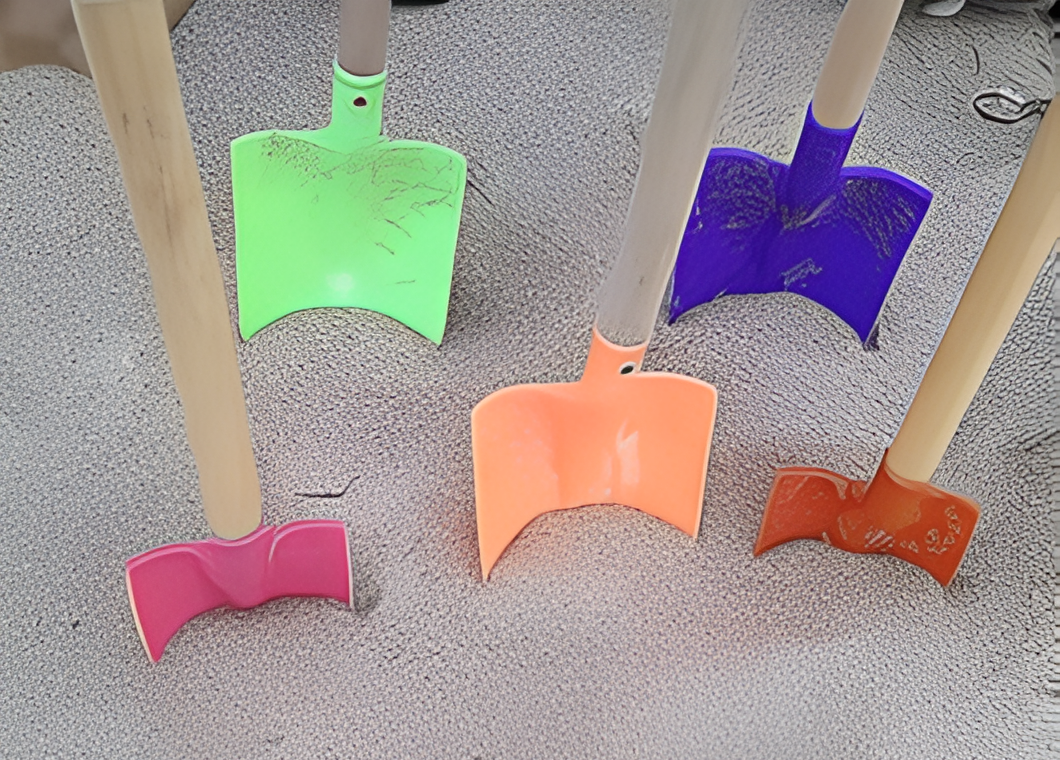
In the Sandpit
What happens when diverse groups of researchers are forced to catalyse and collide and collaborate? Questions arise that wouldn’t otherwise have been posed, and partnerships form between people from very different scientific disciplines. That’s what often makes the output of Sandpits (aka Ideas Labs) unique and innovative
-

Playing Around
Maybe creativity is just the adult word for play. Think about it: creativity involves testing, trying, imagining, pretending, expressing, making things up – everything that is part of a child’s world of play. When we use our creativity to solve a problem, we’re actually playing with the problem, playing with language and perspective, toying with…
-

Don’t Tell, Ask
Creating an environment where people feel comfortable asking questions is key. Most people are too careful about asking questions, “for fear of looking stupid, or because they know the organization won’t value it.” This fear shuts down the overall critical thinking quotient, and closes doors that might otherwise have been open to new ideas and…